

Can fibreglass grating be used in power plants? That's a question I get asked a lot as a supplier of Fibreglass Grating. And the answer is a resounding yes! In this blog, I'll dive into why fibreglass grating is a great choice for power plants, share some real - world examples, and give you the low - down on its benefits.
First off, let's talk about what fibreglass grating is. Fibreglass Grating is made from a combination of fibreglass and resin, which gives it some unique properties. You can check out more about it on our website here: Fibreglass Grating. There are different types, like Pultruded Grating, which you can learn about at Pultruded Grating, and Fiberglass Grating Sheets, details of which are available at Fiberglass Grating Sheets.
One of the biggest concerns in power plants is corrosion. Power plants deal with all sorts of harsh chemicals, high humidity, and extreme temperatures. Traditional metal gratings can rust and corrode over time, which not only weakens the structure but also poses a safety risk. Fibreglass grating, on the other hand, is highly resistant to corrosion. It won't rust, no matter how much it's exposed to water, chemicals, or other corrosive substances. This means a longer lifespan and less maintenance for power plant operators.
Take, for example, a coal - fired power plant. The environment in a coal - fired power plant is extremely harsh. There are coal dust, sulfur dioxide, and other pollutants in the air. The floors and walkways are often wet due to steam and water used in the cooling processes. Metal gratings in such an environment would start to corrode within a few years. But fibreglass grating can withstand these conditions for decades. It can handle the acidic nature of the pollutants and the constant moisture without losing its structural integrity.
Another important factor is safety. Power plants are high - risk workplaces. Workers are constantly moving around, and there's a risk of slips, trips, and falls. Fibreglass grating has a non - slip surface, which is a huge advantage. The surface can be designed with different textures to provide maximum grip, even when the grating is wet. This reduces the chances of accidents and keeps the workers safe.
In addition, fibreglass grating is lightweight. Compared to metal gratings, it's much easier to handle and install. This is a big plus in power plants, where installation and maintenance work often have to be done in tight spaces and at great heights. Less weight also means less stress on the supporting structures. You can save on both labor costs and the cost of additional support structures when you use fibreglass grating.
Let's also talk about electrical insulation. Power plants are full of electrical equipment. Metal gratings are conductors of electricity, which can be dangerous in case of a short - circuit or electrical fault. Fibreglass grating, however, is an excellent electrical insulator. It provides an extra layer of safety by preventing electrical currents from passing through the grating. This is crucial in areas where workers are in close proximity to electrical systems.
Now, let's look at some real - world applications of fibreglass grating in power plants. In a nuclear power plant, fibreglass grating is used in areas where there's a risk of radiation exposure. Since it doesn't corrode and is easy to clean, it's ideal for areas that need to be kept free from contaminants. It can also be used in the cooling towers of power plants. The cooling towers are exposed to high - velocity water and chemicals, and fibreglass grating can handle these conditions without deteriorating.
In gas - fired power plants, fibreglass grating is used in the compressor rooms. These rooms have high - pressure gas systems, and the non - conductive and corrosion - resistant properties of fibreglass grating make it a perfect choice. It can also be used in the control rooms, where workers need a safe and stable surface to work on.
Cost - effectiveness is another reason why fibreglass grating is a great option for power plants. Although the initial cost of fibreglass grating may be slightly higher than that of metal gratings, the long - term savings are significant. You save on maintenance costs, replacement costs, and labor costs. Over the lifespan of the power plant, the cost of using fibreglass grating is much lower than using traditional metal gratings.
When it comes to customization, fibreglass grating offers a lot of flexibility. It can be cut and shaped to fit any specific requirements of the power plant. Whether you need a small, custom - sized grating for a tight corner or a large, complex - shaped grating for a big open area, it can be made to order. This means that power plant operators can get exactly what they need without having to compromise on design or functionality.
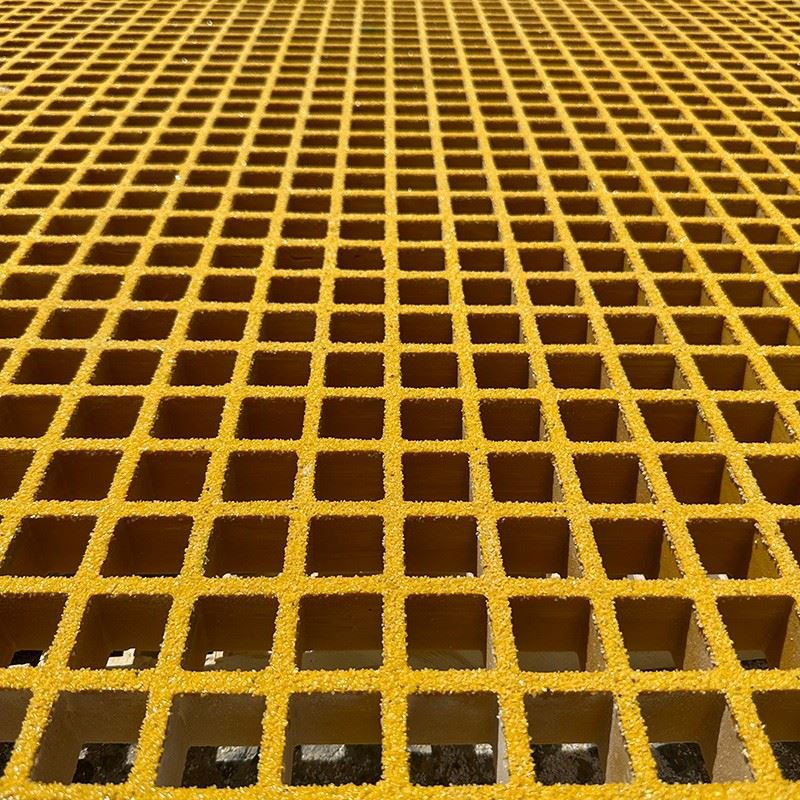

So, as you can see, fibreglass grating has a lot to offer power plants. It's corrosion - resistant, safe, lightweight, electrically insulating, cost - effective, and customizable. If you're a power plant operator or involved in the construction or maintenance of power plants, I highly recommend considering fibreglass grating for your next project.
If you're interested in learning more about our Fibreglass Grating products or want to discuss your specific requirements, don't hesitate to get in touch. We're here to help you find the best solution for your power plant needs.
References
- Industry reports on power plant safety and materials
- Case studies of fibreglass grating applications in power plants
- Technical specifications of fibreglass grating products