

Can a stainless square tank be used for storing lubricants?
As a supplier of Stainless Square Tanks, I often encounter questions from customers regarding the suitability of our tanks for various storage purposes. One common query is whether a stainless square tank can be used for storing lubricants. In this blog post, I will delve into this topic, exploring the properties of stainless steel, the characteristics of lubricants, and the compatibility between the two.
Properties of Stainless Steel
Stainless steel is a popular material for tank construction due to its numerous advantageous properties. Firstly, it offers excellent corrosion resistance. This is primarily because stainless steel contains chromium, which forms a thin, passive oxide layer on the surface of the metal. This oxide layer acts as a protective barrier, preventing the underlying metal from reacting with the environment and thus reducing the risk of rust and corrosion.
Secondly, stainless steel is strong and durable. It can withstand high pressures and mechanical stresses, making it suitable for use in a wide range of applications. Whether the tank is installed indoors or outdoors, it can maintain its structural integrity over a long period of time.
In addition, stainless steel is hygienic and easy to clean. It does not support the growth of bacteria or other microorganisms, which is crucial for applications where cleanliness is of utmost importance. This property also makes it relatively simple to maintain the tank, ensuring that it remains in good condition for storing various substances.
Characteristics of Lubricants
Lubricants are substances used to reduce friction, wear, and heat between moving surfaces. They come in various forms, including oils, greases, and synthetic lubricants. Each type of lubricant has its own unique chemical composition and physical properties.

Oils are the most common type of lubricant. They are typically composed of base oils and additives. The base oils can be mineral oils, synthetic oils, or a combination of both. Additives are used to enhance the performance of the lubricant, such as improving its viscosity, oxidation resistance, and anti - wear properties.
Greases are semi - solid lubricants that are made by thickening oils with a thickening agent. They are often used in applications where a more viscous lubricant is required, such as in bearings and gears.
Synthetic lubricants are engineered lubricants that are designed to provide superior performance in specific applications. They are often more expensive than mineral - based lubricants but offer better resistance to high temperatures, oxidation, and wear.
Compatibility between Stainless Square Tanks and Lubricants
The good news is that in most cases, stainless square tanks are highly compatible with lubricants. The corrosion - resistant nature of stainless steel means that it can effectively store lubricants without being damaged by the chemical components of the lubricants.
For mineral - based lubricants, stainless steel provides a stable storage environment. The passive oxide layer on the surface of the stainless steel prevents the oil from reacting with the metal, ensuring that the lubricant's quality remains intact over time.
Synthetic lubricants, which are often more chemically stable than mineral - based lubricants, also have excellent compatibility with stainless steel. The high - quality construction of stainless square tanks can safely contain these advanced lubricants, protecting them from contamination and degradation.
Greases, although more viscous, can also be stored in stainless square tanks. The smooth surface of stainless steel allows for easy filling and emptying of the tank, and the tank's durability ensures that it can withstand the pressure exerted by the semi - solid grease.
However, it is important to note that some specialized lubricants may contain aggressive additives or chemicals that could potentially react with stainless steel under certain conditions. For example, some lubricants used in extreme - pressure applications may contain sulfur - based additives. In such cases, it is necessary to conduct a compatibility test before using the tank for long - term storage.
Advantages of Using Stainless Square Tanks for Lubricant Storage
There are several advantages to using stainless square tanks for storing lubricants.
1. Space Efficiency
Square tanks are more space - efficient than round tanks, especially when it comes to installation in confined areas. They can be easily arranged side by side, maximizing the use of available space in a storage facility.
2. Easy Installation and Maintenance
Stainless square tanks are relatively easy to install. They can be fabricated to specific dimensions, allowing for a customized fit in the storage area. Maintenance is also straightforward, as the smooth interior surface of the tank can be easily cleaned, and any potential issues can be quickly identified and addressed.
3. Visibility and Monitoring
The square shape of the tank provides better visibility of the lubricant level. This makes it easier for operators to monitor the quantity of lubricant in the tank and plan for refilling in a timely manner.
4. Long - Term Investment
Due to the durability and corrosion resistance of stainless steel, a stainless square tank is a long - term investment. It can serve as a reliable storage solution for lubricants for many years, reducing the need for frequent tank replacements.
Other Options for Storage
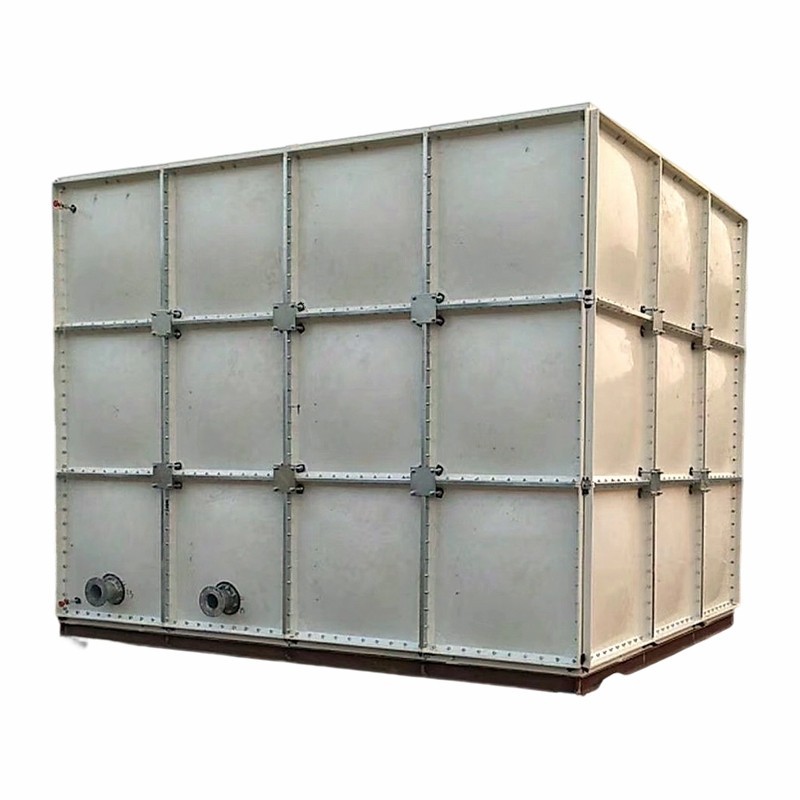
While stainless square tanks are an excellent choice for lubricant storage, there are other options available in the market. For example, FRP Tank for Water Treatment is another type of tank that can be considered. FRP (Fiber - Reinforced Plastic) tanks are lightweight, corrosion - resistant, and relatively inexpensive. However, they may not be as strong or durable as stainless steel tanks, especially when it comes to storing lubricants over a long period of time.
GRP FRP Water Tank is also a popular option. GRP (Glass - Reinforced Plastic) tanks offer good chemical resistance and are suitable for a variety of applications. But similar to FRP tanks, they may have limitations in terms of strength and long - term durability compared to stainless steel tanks.
If you are specifically looking for a high - quality and reliable tank for lubricant storage, our Stainless Steel Square Tank is the ideal choice. It combines the best features of stainless steel with a practical square design, ensuring optimal performance and longevity.
Conclusion
In conclusion, a stainless square tank can indeed be used for storing lubricants. The corrosion - resistant, strong, and hygienic properties of stainless steel make it a suitable material for storing various types of lubricants, including oils, greases, and synthetic lubricants. The space - efficiency, easy installation and maintenance, and long - term durability of stainless square tanks further enhance their suitability for lubricant storage.
If you are in the market for a tank to store lubricants, I encourage you to consider our stainless square tanks. We have a wide range of sizes and specifications to meet your specific needs. Contact us to discuss your requirements and explore the possibilities of using our high - quality stainless square tanks for your lubricant storage. Our team of experts is ready to assist you in making the right choice.
References
- ASM Handbook, Volume 13A: Corrosion: Fundamentals, Testing, and Protection. ASM International.
- Lubrication Fundamentals. CRC Press.